










CEAD
ETH Zurich’s master students create contemporary ice cream shop interior with ultra-lightweight architectural structure
Original Source :
Content Written by CEAD
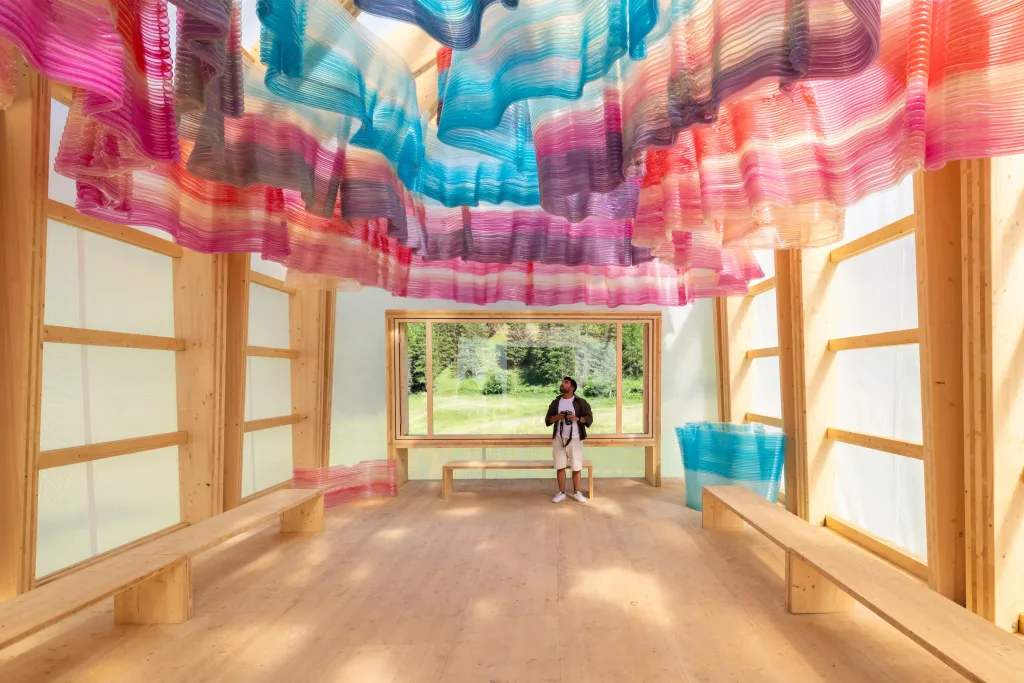
Digital fabrication has emerged as one of the most important shifts in the construction industry in recent decades. By using advanced digital technologies to produce components directly from a 3D model, it unlocks new possibilities in design, material efficiency and production speed. Unlike traditional methods, that rely heavily on manual labor and standardized processes, digital fabrication allows for customized complex geometries to be produced with precision.
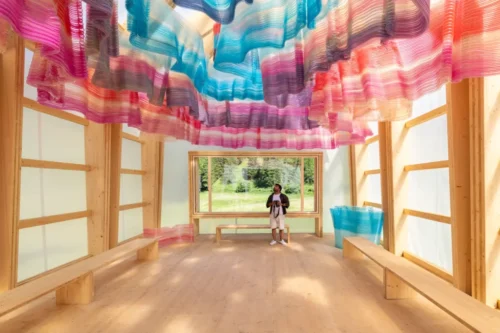
3D-printed elements in contemporary ice cream shop | Picture credit: Stefan Kaiser
At its core, the process begins with a computer-aided design (CAD) file, which is translated into digital data that drives production via computer-aided manufacturing (CAM). This data drives automated equipment, such as 3D printers, CNC mills, laser cutters or robotic assembly arms.
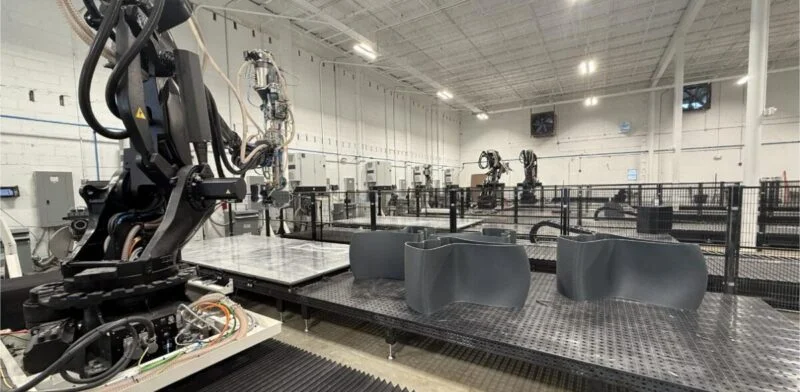
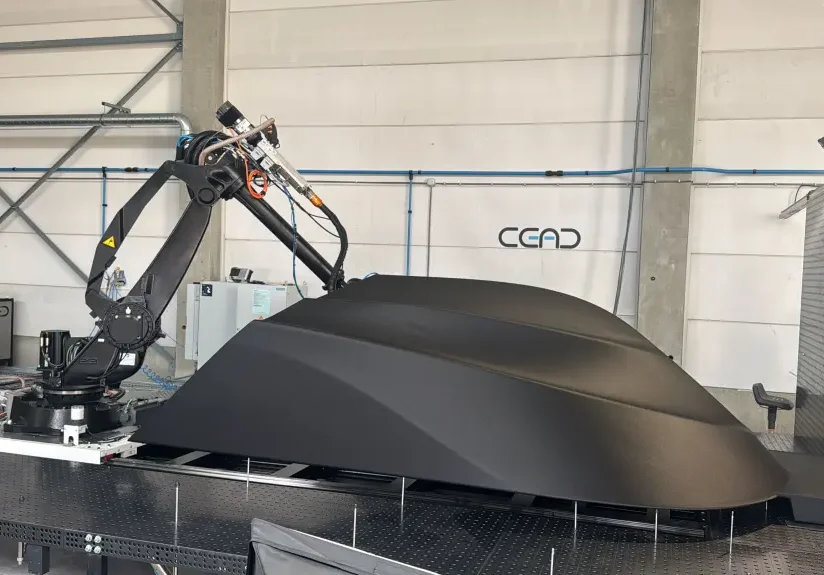
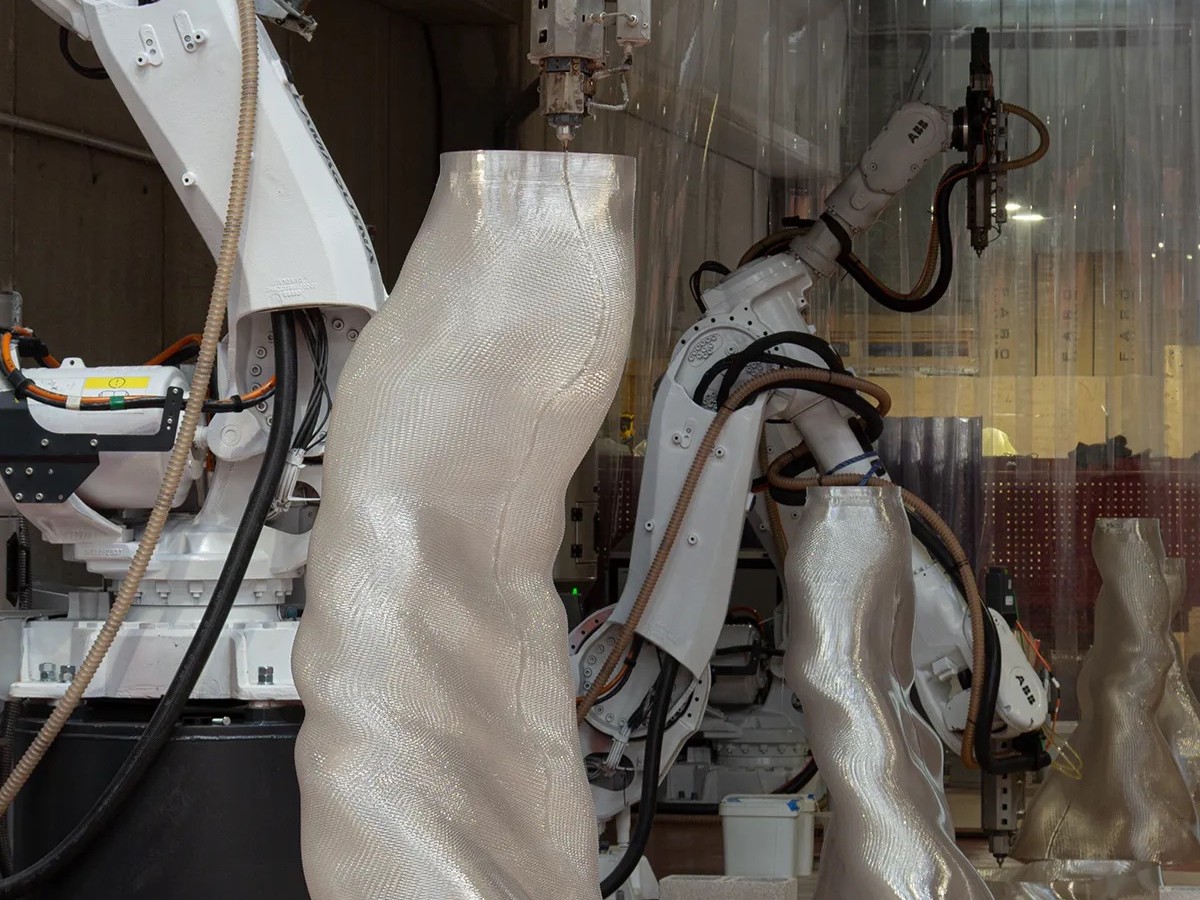
Among these emerging technologies, large-scale 3D printing, an additive manufacturing process, builds physical parts layer by layer from thermoplastics, metals or composites. In ETH Zurich’s case, a robotic arm with a pellet extrusion head from CEAD, processes recycled thermoplastic to create unique architectural structures.
ETH Zurich’s pioneering solutions in architectural components using large-scale 3D printing
The department of Architecture, ETH Zurich, is recognized globally for pioneering solutions in applying digital fabrication processes to non-standardized architectural components. As one of CEAD’s long-term partners, ETH Zurich first adopted a CEAD E25 extruder in 2022, using it to aid their research into how large-format additive manufacturing (LFAM) can transform the built environment, from producing concrete formwork for projects like RIBB3D and the Eggshell Pavilion, to fabricating end-use components that are integrated directly into building structures. Recently, they expanded their portfolio with the CEAD E40 extruder, enabling higher output and larger-scale components.
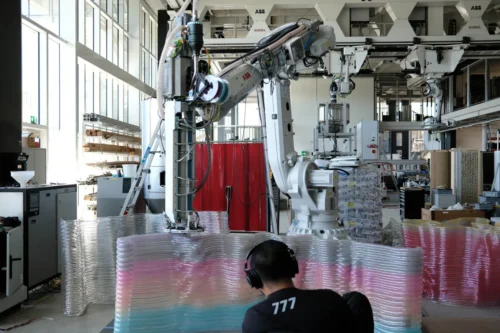
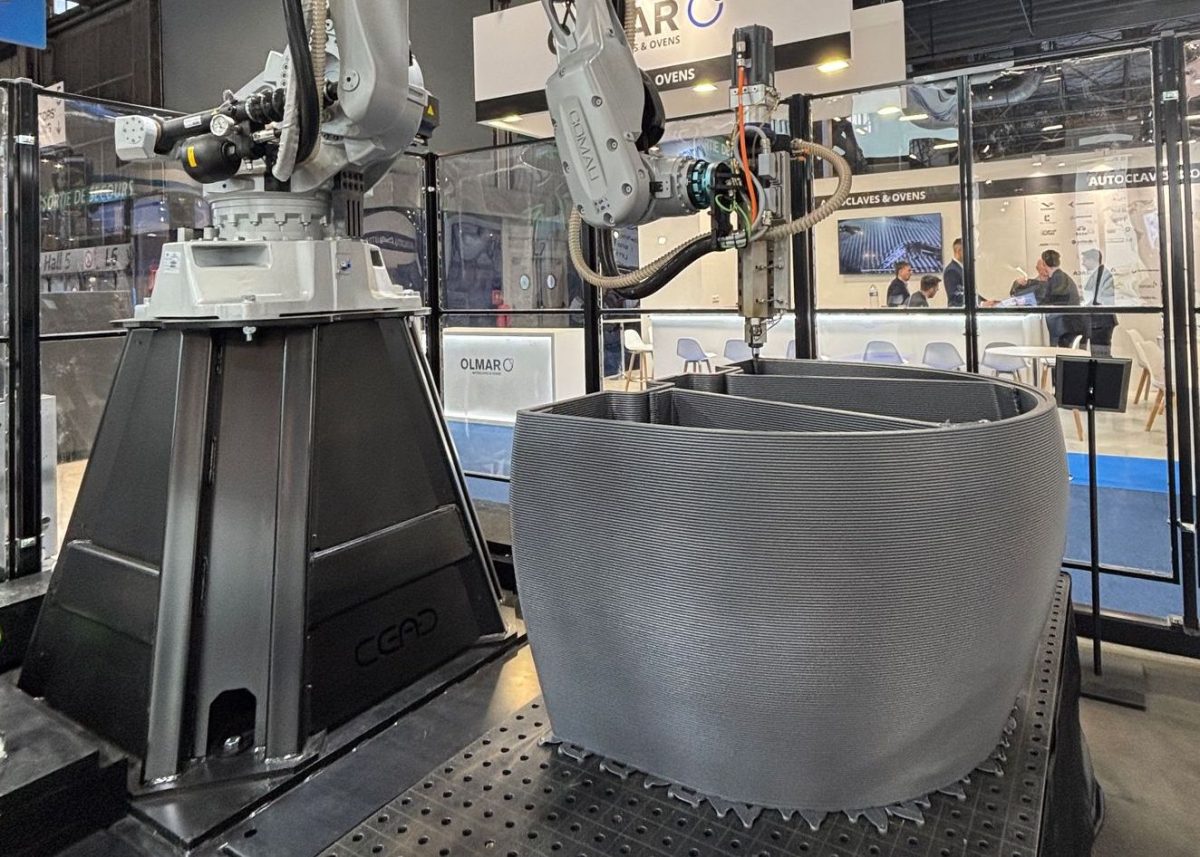
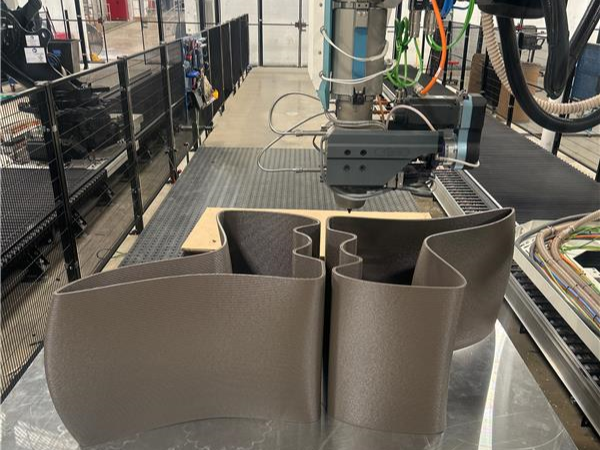
CEAD’s E40 extruder 3D printing lightweight structures with hollow-core 3D printing (HC3DP) | Picture credit: Lais Hotz
Contemporary ice cream shop interior with 3D-printed thermoplastic
The latest project comes from master’s students in the Advanced Studies in Architecture and Digital Fabrication (MAS ETH DFAB) program. Neighboring the recently completed White Tower, a contemporary ice cream shop has been opened in the Alpine village of Mulegns, Switzerland. The shop’s ceiling is completed with sweeping, colorful 3D printed elements whose wave-like patterns create the illusion of soft-serve ice cream. Despite covering over 250 square meters, the structure weighs less than a ton thanks to hollow-core 3D printing. This experimental extrusion technique was developed in the Robotic Fabrication Lab at ETH Zurich by Mathias Leschok, who made it commercially available at SAEKI robotics.
For this project, the CEAD E40 extruder provided the required motor power to print a structure at this scale with HC3DP. The CEAD E40 has an output of 60 kg/hours which allows for higher fabrication speed and scalability of parts offering a higher torque needed for the use of this novel printing technique. Material output can otherwise be a limiting factor in terms of size and printing time. The elements demonstrate how LFAM can bring architectural visions to life while minimizing material usage and weight.
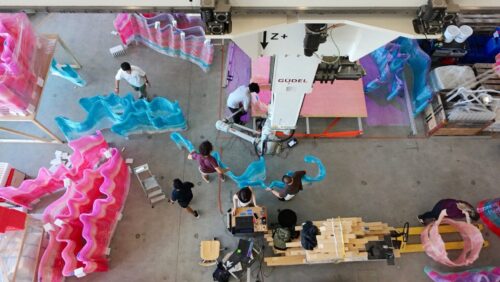
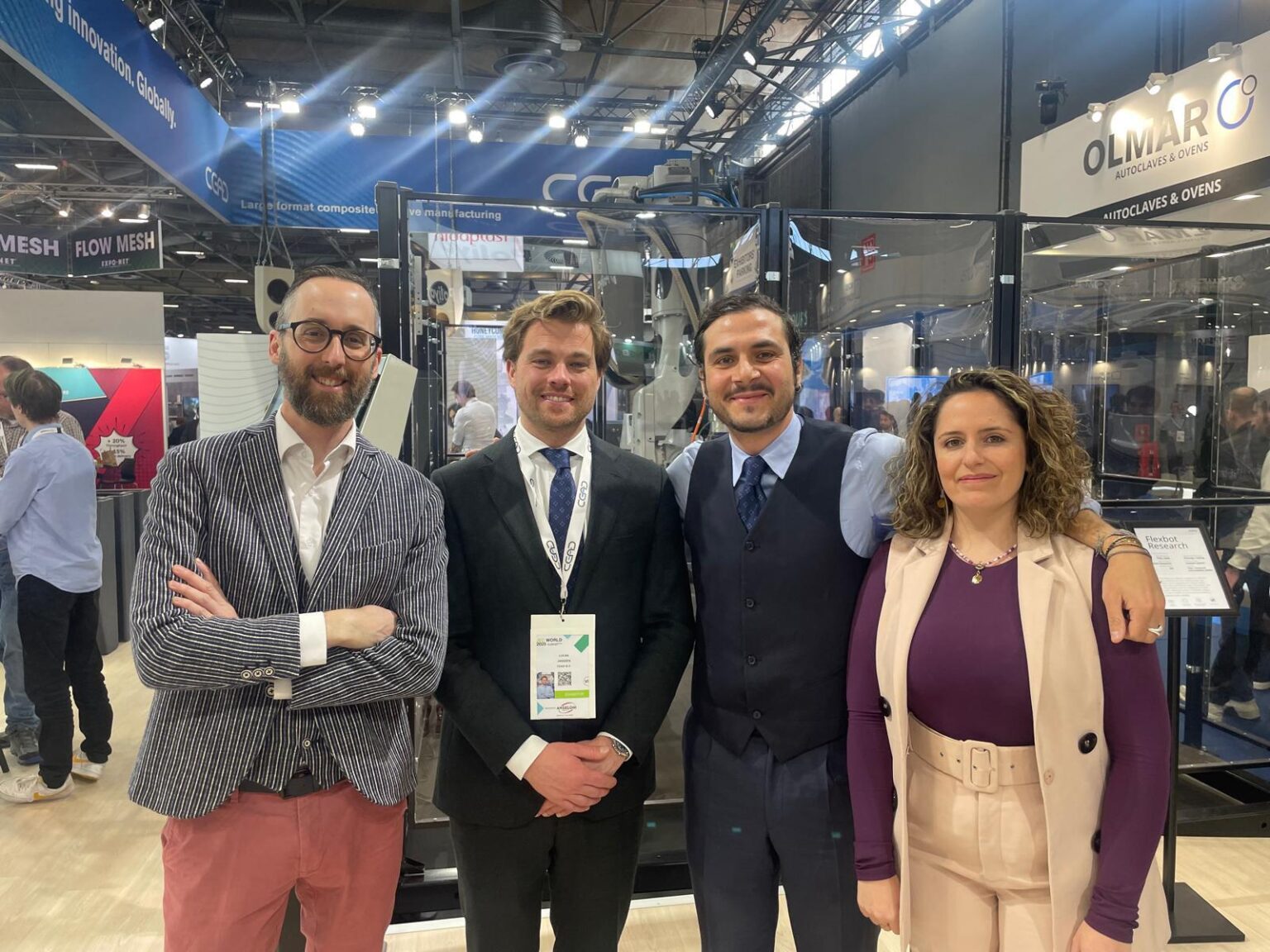
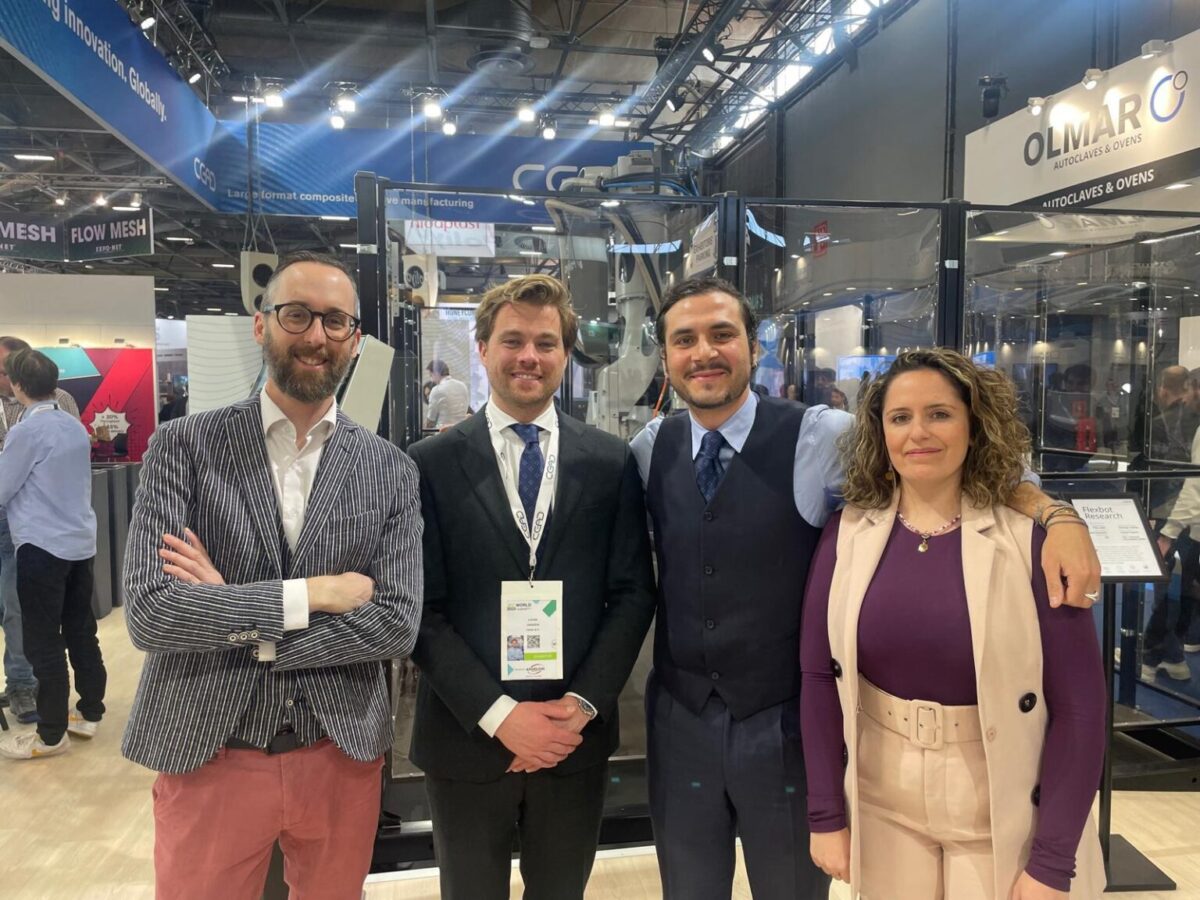
Master’s students in the Advanced Studies in Architecture and Digital Fabrication (MAS ETH DFAB) program | Picture credit: Lais Hotz
Sustainable solutions
In collaboration with Nova Fundaziun Origen, the team used recycled PETG to print the structures, a thermoplastic commonly used in food packaging. Thermoplastics can be shredded and reused in new parts. In addition, the timber structure of the ice cream shop’s exterior, can be disassembled and reassembled.
This project shows how reclaimed wood and plastic waste can be reused in architecture and help shape design narrative. In this case, the design was inspired by Belle Époque ornaments and Baroque exuberance. This project demonstrates in practice, that large scale additive manufacturing offers a viable, more sustainable and highly flexible approach to producing building components and architectural features.
Preparing the next generation for industry’s shift towards digital manufacturing
In addition to advancing research and design, ETH Zurich plays a crucial role in shaping the next generation of engineers, designers and creators. By embedding innovative fabrication technologies, like large-scale 3D printing, into their academic programs, they equip students with the skills to drive innovation forward and to work in modern, automated production environments. This prepares students to work with manufacturing methods that are less dependent on increasingly scarce and labor-intensive traditional skills.
It also aligns with the industry’s shift towards digital manufacturing. This approach not only nurtures creative freedom and design expression, but also paves the way for more sustainable and efficient building structures and architectural components. The result is a new generation ready to implement solutions that can reduce costs and material usage, accelerate project timelines and unlock entirely new possibilities in architecture and product design.
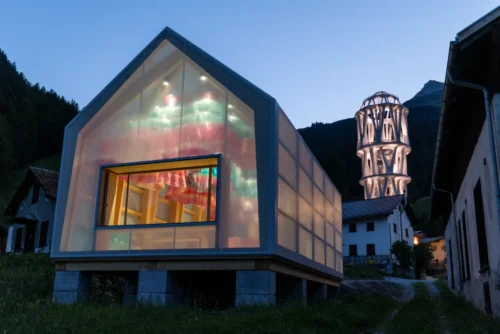
Contemporary ice-cream shop located next to the recently completed White Tower in the Alpine village of Mulegns, Switzerland | photo credit: Pluem Pongpisal
Project credits
The Geletaria is part of, and in collaboration with, the Nova Fundaziun Origen’s vision for Mulegns, showcasing architectural innovation for cultural and economic renewal in the region
In collaboration with: Dr. Giovanni Netzer, director of Nova Fundaziun Origen
Research team – digital building technologies: Prof. Benjamin Dillenburger, Nik Eftekhar Olivo (research lead) and Paul Jaeggi
Teaching team: Dr. Petrus Aejmelaeus-Lindström (teaching lead), Anaya Kango and Joana Tomaz
Supporting technicians: Tobias Hartmann, Philippe Fleischmann, Michael Lyrenmann, Luca Petrus
MAS DFAB students: Marc Ribert Arqués, Lais Hotz, Spyros Pyrgiotis, Alim Battal, Dalila Romero Zenker, Daniela Larbaleister, David Villegas, Guillem H Camarasa, Ioanna Tatouli, Jim Chen, Konstantina Laki, Nicolas Benjamin Boscoboinik, Pluem Pongpisal, Yen Ting Liu