









Key notes:
-
Bypasses Supply Chain Bottlenecks: Wire Arc Additive Manufacturing (WAAM) eliminates long foundry lead times and the high costs of casting or machining massive structural aluminum components from solid blocks.
-
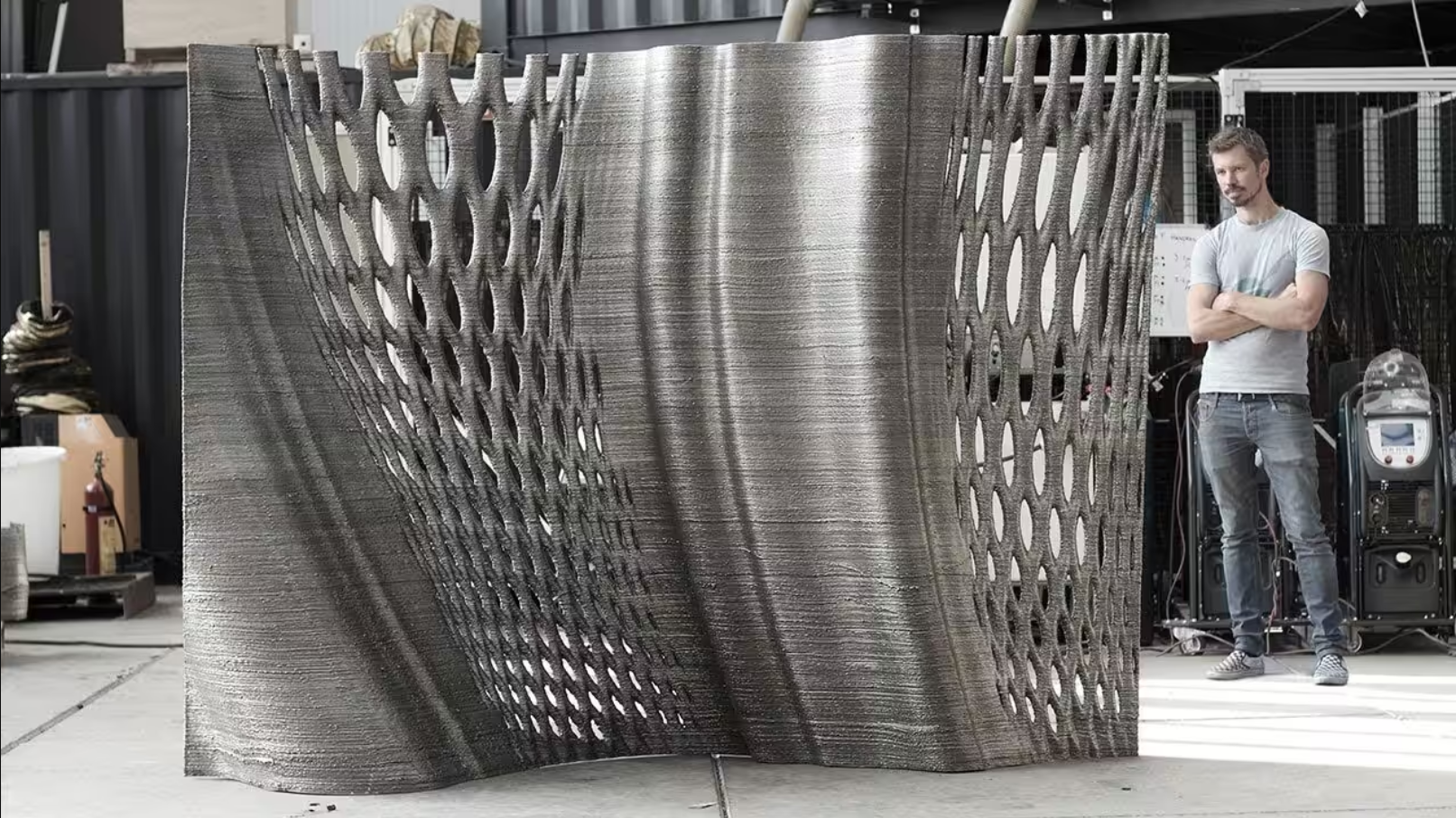
Unconstrained Scale & Production: Operates without the restrictive build-volume chambers of traditional powder-bed systems, leveraging multi-axis robotic arms to print components spanning several meters in open shop floor environments.
-
Superior Deposition Rates: Achieves high-speed throughput between 1.0 and 4.0 kg/h (a 10x to 40x increase over laser powder systems) with 100 per cent material utilization.
-
Enhanced Safety & Lower Cost: Utilizes standard commercial wire feedstock, which is three to ten times cheaper than atomized powders and eliminates the severe fire and explosion hazards associated with pyrophoric aluminum powder.
-
Exceptional Mechanical Properties: Delivers fully dense, certified parts with unprecedented ductility (such as 30% elongation for the 5183 alloy), comfortably exceeding standard cast values and directly rivaling wrought material benchmarks.
Advanced Aluminum Additive Manufacturing
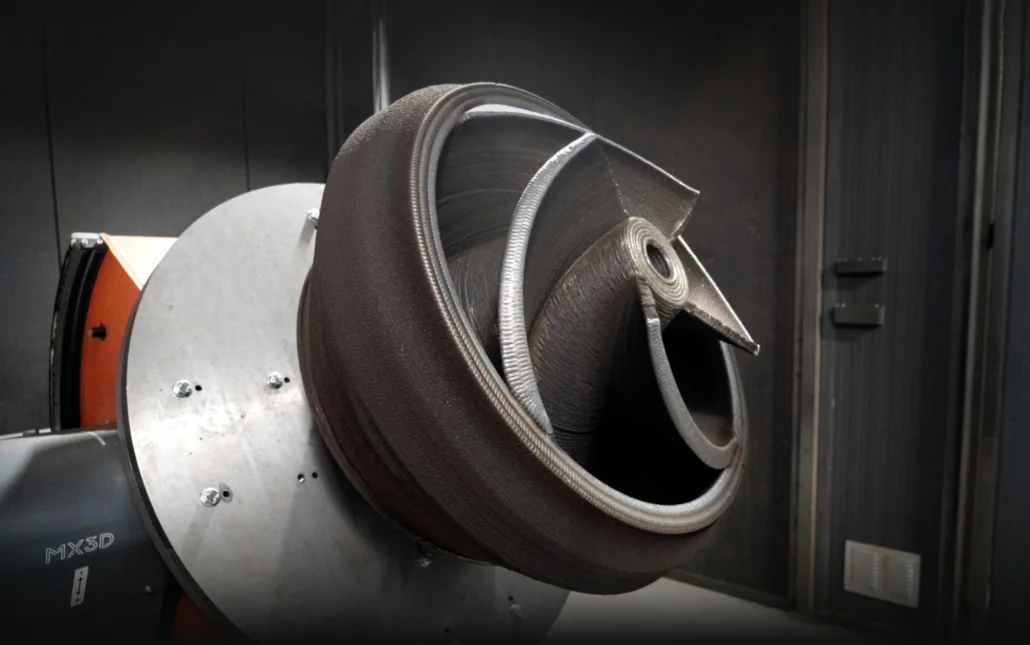
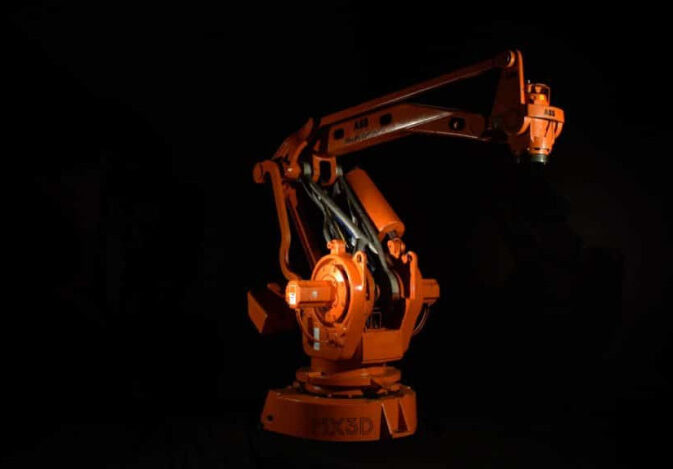
As an industry-leading aluminum 3D printer and aluminum 3D printer solution, MX3D’s Wire Arc Additive Manufacturing process is transforming heavy industrial production. Whether searching for a high-capacity 3D aluminum printer or a 3D aluminum printer for large-scale structural components, advanced aluminum additive manufacturing offers an unconstrained, cost-effective alternative to traditional manufacturing constraints. Utilizing a highly optimized aluminum waam (or aluminum waam ) robotic torch assembly, this process melts metallic wire feedstock layer by layer to construct heavy, near-net-shape objects on demand without custom tooling or moulds.
Engineering and procurement teams face a persistent supply chain bottleneck when sourcing massive structural aluminum components. Large configurations, such as vessel superstructures, custom yacht components, or heavy aerospace bulkheads, are incredibly complex to cast, exceptionally expensive to machine from solid blocks for low quantities, and prone to severe production lead times from specialized foundries.
Our advanced production facility specialises in printing certified components across the 2000, 4000, 5000, and 6000 alloy series—including structural 4018, 4046, 5183, 5356, 6063, and aerospace-grade 2319 alloys—all designated in accordance with EN ISO 18273. This capability allows the maritime, architecture, defense, and aerospace sectors to fail lower lead times while achieving robust, code-compliant structural performance. Furthermore, MX3D continues to expand the industrial material toolbox, managing metallurgical excellence across both lightweight alloys and advanced steels by utilizing our comprehensive materials and certification guidelines. This systematic control enables us to deliver certified components for the most severe engineering environments, including high-performance applications using advanced alloys such as Super Duplex stainless steel.
Why Wire Arc Additive Manufacturing Works for Aluminum Parts
Industrial manufacturing strategies require a clear technological justification before replacing conventional methods like casting or forging. WAAM delivers precise advantages for large-format aluminum, particularly when compared to powder bed or cold fusion options.
Scale Without Powder Bed Limits
Conventional laser powder bed fusion (LPBF) is heavily restricted by the physical volume of its internal processing chambers, which generally limits maximum part dimensions to under 500 millimeters. This small scale makes powder bed machines completely unsuited for large structures in maritime or civil engineering. Furthermore, powder bed printing is largely confined to specific silicon-rich alloys, such as AlSi10Mg, to prevent thermal cracking during cooling.
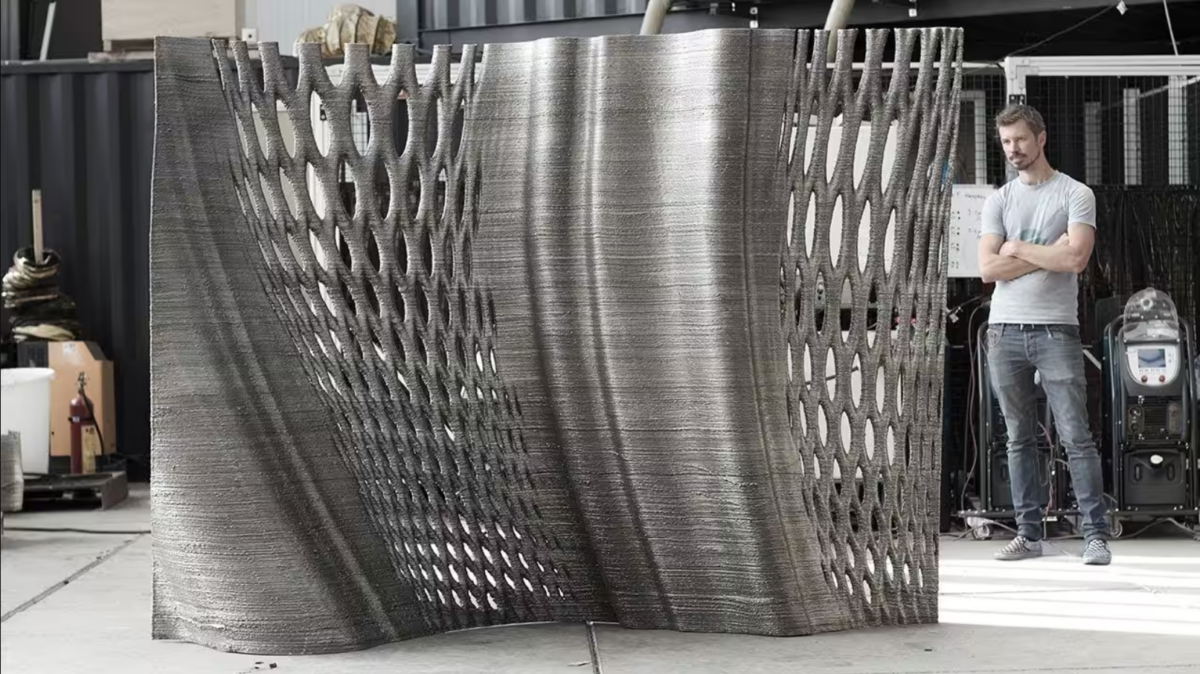
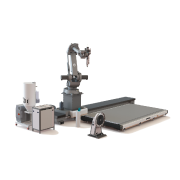
Robotic wire arc technology operates without conventional structural build chamber limitations, utilizing the unconstrained physical reach of a multi-axis robotic arm to print heavy components spanning several meters out in an open shop floor environment. For applications requiring highly stringent atmospheric shielding, MX3D integrates custom-engineered environmental chambers to provide precise atmospheric control over the weld zone without compromising build volume.
Wire Feedstock vs. Aluminum Powder: A Critical Difference
The mechanical, financial, and safety differences between raw feedstock variants represent a primary consideration for industrial procurement managers. Loose aluminum powder introduces severe operational hazards in a factory setting. In its fine atomized form, aluminum powder is highly pyrophoric, presenting a constant fire and explosion hazard that demands specialized explosion-proof storage, intense climate controls, and fully inert gas processing environments during handling and printing.
Industrial wire feedstock utilizes the same safe, stable raw material that has populated commercial metal inert gas (MIG) welding lines for decades. Wire feedstock eliminates fire hazards, can be handled safely in open factory environments, and costs significantly less—trading between three and ten times cheaper per kilogram compared to the premium price required for atomized powders.
High Deposition Rates: A Productivity Leap
Beyond physical scale, wire arc deposition offers a massive advantage in throughput. While traditional LPBF systems typically operate at restricted deposition rates of 0.1 to 0.3 kg/h, MX3D’s aluminum WAAM process regularly achieves high-speed deposition between 1.0 and 4.0 kg/h. This represents a 10x to 40x increase in manufacturing throughput, making it uniquely economical for massive, multi-meter structural components. Additionally, wire feedstock achieves nearly 100 per cent material utilization within the localized weld pool, completely bypassing the costly reclaiming, sifting, and waste management cycles mandatory for powder systems.
Available Aluminum Alloys for WAAM
The flexibility of wire feedstocks allows MX3D to process standard structural, marine, defense, and aerospace-grade alloys that engineers are already familiar with. The table below represents the fully qualified catalog of engineering grades processed via our MetalXL platform.
Aluminum Alloy Series Reference Table
| Alloy Series | Official EN ISO 18273 Grade | Key Material Properties | Primary Structural Applications |
|
2319 Series
(Al Cu) |
S Al 2319
(AlCu6MnZrTi) |
High strength characteristics at elevated temperatures; aerospace standard. | Specialized aerospace structural frames, custom defense fixtures. |
|
4018 & 4046 Series
(Al Si) |
S Al 4018 (AlSi7Mg)
S Al 4046 (AlSi10Mg) |
Highly fluid during melting; excellent silicon content to prevent print cracking. | Intricate industrial tooling, customized pump sections, casings. |
|
5183 & 5356 Series
(Al Mg) |
S Al 5183 (AlMg4,5Mn0,7)
S Al 5356 (AlMg5Cr) |
Outstanding corrosion resistance; non-heat treatable; high marine structural integrity. | Maritime structures, yacht components, pressure vessels, and chemical fluid equipment. |
|
6063 Series
(Al Mg Si) |
S Al 6063
(AlMg0.7Si) |
Good mechanical strength, easily weldable, excellent structural versatility. Unlike the 5xxx series, 6063 is heat-treatable , allowing post-print thermal processing to unlock optimal mechanical performance. | Civil engineering, architecture, connectors, and general structural applications. |
MX3D Aluminum WAAM: Specifications and Capabilities
Validating an additive process for structural use requires transparent mechanical property tracking and rigorous post-processing baselines.
Material Properties and Performance
By optimizing print parameters and utilizing calibrated parameter sets within our proprietary software, printed aluminum components achieve impressive mechanical properties that comfortably exceed standard cast values and directly rival wrought material benchmarks.
| Mechanical Property | WAAM 5183 (MX3D Process) | Wrought 5183 | Cast 5183 | LPBF 5183 |
| Ultimate Tensile Strength | 290 MPa | 280 – 350 MPa | 300 – 330 MPa | 270 – 330 MPa |
| 0.2 Per Cent Yield Strength | 130 MPa | 130 – 180 MPa | 125 – 145 MPa | 150 – 160 MPa |
| Elongation Percentage | 30% | 11% – 16% | <15% | 20% – 31% |
Exceptional Material Ductility Note
The 30% elongation achieved by the MX3D WAAM 5183 process represents an extraordinary benchmark for printed aluminum. This exceptional ductility significantly outperforms traditional cast (<15%) or wrought (11%–16%) values, providing superior resistance to fatigue, impact, and cracking in high-stress structural configurations.
Post-Processing for Structural Aluminum WAAM
Achieving full certification requires a managed sequence of post-print operations, which includes:
-
Stress Relief Thermal Cycles: Printed aluminum structures undergo a controlled thermal stress relief treatment to relax internal residual stresses and ensure absolute geometric stability during secondary operations.
-
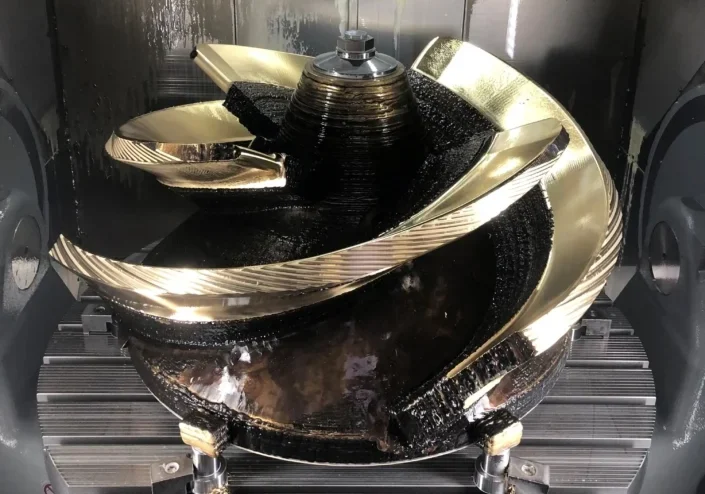
CNC Machining: Subtractive milling, depending on the end use of the print, removes the external weld bead ripples from mating faces or critical interfaces to bring the part to its final, precise blueprint tolerances.
-
Surface Protection: Components deployed in severe saltwater conditions receive advanced surface treatments, including anodising or specialized marine-grade primers and protective coatings, to maximize environmental longevity.
-
Non-Destructive Testing (NDT): Technicians implement rigorous NDT methods, such as radiographic testing and ultrasonic scanning, to verify internal density and ensure absolute compliance with code limits.
Reference Projects in Action
Our production facility in Amsterdam has successfully executed large-format aluminum projects across multiple sectors:
-
The Aluminum Bulb Keel: Custom designed by KM Yachtbuilders and printed via Robotic WAAM by MX3D utilizing marine-grade 5356 aluminum wire feedstock , this impressive four-metre-long, 8 mm thick bulb keel incorporates internal structural stiffeners to improve global structural integrity. The surface was finished manually, and the internal volume was filled with lead to serve as structural ballast, demonstrating how the process accommodates high levels of custom yacht component tailoring.
-
The Schindler Elevate Project: Completed in collaboration with the Swiss elevator company Schindler, this study utilized topology optimization to radically redesign elevator carts. The entire structural cart was printed in aluminum using the alloy AlMg4.5Mn (grade 5183) for its exceptionally strong material properties, resulting in significant structural weight reduction and shortened innovation cycles.
Aluminum 3D Printing Applications
The unique combination of zero tooling costs, fast deposition, and large formatting options allows wire arc aluminum to target critical supply chain bottlenecks across four primary market sectors.
The maritime sector represents a premier deployment zone for WAAM with aluminium. Conventional supply chains force vessel operators to wait months for castings when critical deck components or structural fittings fail. By implementing WAAM with marine-grade alloys like 5356 or 5183, operators can print lightweight deck structures, custom bulb keels, and specialized cowl vents on demand, ensuring full compliance with classification society rules while mitigating expensive vessel downtime.
Modern civil engineering relies heavily on lightweight materials to achieve ambitious architectural designs. WAAM allows structural engineers to design freeform nodes, custom facade brackets, and highly optimized lightweight structural frames that are impossible to extrude or cast cost-effectively in low production volumes.
In high-performance automotive development, rapid prototyping and lightweight structural optimization are critical. WAAM provides engineering teams with the capacity to print large, one-off prototype vehicle subframes, custom suspension mountings, and lightweight assembly jigs or tooling fixtures directly from digital models, completely bypassing the lengthy lead times associated with traditional prototype tooling.
For aerospace structural frames where massive raw blocks of aluminum are conventionally milled down into thin-walled structures, WAAM offers an efficient alternative. By depositing near-net shape ribs, brackets, and stiffeners onto base plates using aerospace-grade 2319 wire, aviation manufacturers can drastically lower their buy-to-fly ratios, saving considerable material costs on high-performance alloys.
Frequently Asked Questions About Aluminum 3D Printing
Can WAAM print aluminium?
Yes, wire arc additive manufacturing is fully optimized for aluminum alloys. The process combines an industrial robotic arm with a specialized welding power source to deposit high-quality aluminum wire feedstock in open factory environments.
Which aluminum alloys can be used with WAAM?
The technology utilizes standard, commercially available welding wires. MX3D officially supports the marine grade 5356 and 5183 series, structural 6063 series, silicon-rich 4018 and 4046 series, and aerospace standard 2319 series, all cataloged precisely under EN ISO 18273 standards.
What are the mechanical properties of WAAM-printed aluminum?
Using the right printing parameters, several aluminum alloys achieve excellent post-printed mechanical properties that comfortably exceed standard cast values and rival wrought material benchmarks, delivering exceptional ductility and strength.
Is 3D printed aluminum suitable for marine environments?
Yes, provided the appropriate alloy series is selected. Utilizing the magnesium-rich 5356 or 5183 wire feedstock ensures that the finished, fully dense 3D printed components possess the identical corrosion-immune characteristics of traditional marine-grade plates used in shipbuilding.
What certifications apply to MX3D aluminum production?
MX3D has been successfully audited for the Lloyd’s Register AM Facility Certification and holds an ISO 9001 quality certification by DNV. Our printing processes and components are routinely qualified under DNV ST B203, API 20S, ASME Section IX requirements, and many more.
Ready to Print in Aluminium?
Transitioning your large-scale components to wire arc additive manufacturing requires an established partner with verified technical capabilities. MX3D provides complete, automated production cells and comprehensive contract printing services optimized for structural aluminum applications. Operating from our technical hub in Amsterdam, our team handles everything from initial alloy selection and automated toolpath generation to real-time thermal monitoring and final qualification tracking.